Sage Lang · 5 October 2026
The Intersection of Polymer Chemistry and Timber Engineering in Developing Next-Generation Joist Systems
Polymer chemistry and timber engineering have converged in recent years to reshape how structural joists perform under load, resist environmental stress, and meet sustainability targets in residential and commercial construction. Researchers at institutions across North America and Europe continue to explore hybrid materials where synthetic polymers interface directly with wood fibers, creating composite systems that surpass traditional lumber in span capability and dimensional stability. Data from ongoing field trials indicate these next-generation joists reduce deflection by measurable percentages while maintaining compatibility with standard framing practices.
Core Principles of Polymer Integration in Wood Structures
Polymer matrices applied to timber surfaces or infused into cell structures alter moisture absorption rates and enhance shear strength at critical joints. Studies conducted by the Canadian Wood Council show that certain thermoplastic resins form covalent bonds with lignin components, resulting in interfaces that distribute stress more evenly across the member length. Engineers combine these resins with oriented strand board webs and laminated veneer lumber flanges to produce I-shaped profiles capable of spanning greater distances without intermediate supports.
Adhesive formulations represent another focal point where polymer chemistry directly influences performance. Epoxy-based systems modified with silane coupling agents improve adhesion between wood and metal web connectors, while polyurethane dispersions provide flexibility that accommodates seasonal movement in floor assemblies. Figures released by Natural Resources Canada in 2025 reveal that buildings incorporating these advanced adhesives experience fewer serviceability issues related to squeaking or joint separation over multi-year monitoring periods.
Engineering Advancements in Joist Design
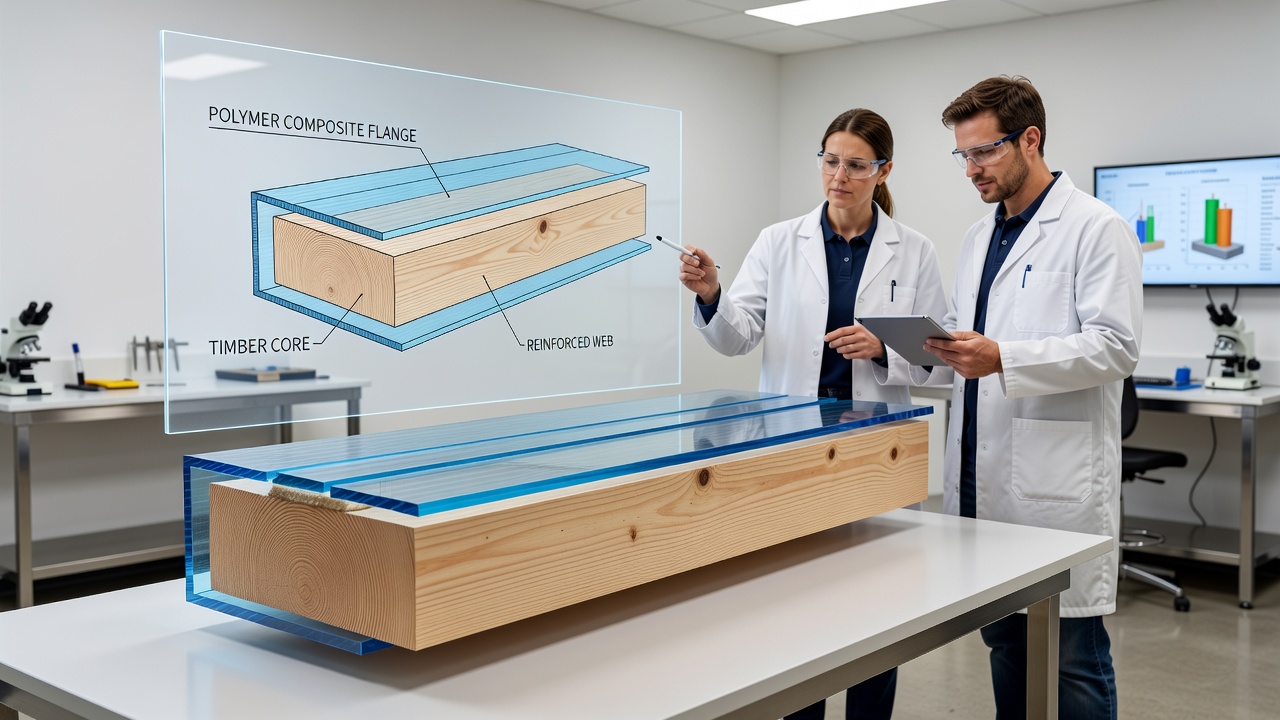
Timber engineers now specify joist systems that incorporate polymer reinforcements at high-stress zones near supports and mid-span points. These reinforcements take the form of thin fiber-reinforced polymer strips bonded to the tension face, increasing bending capacity without adding significant mass. The approach allows designers to reduce overall member depth in multi-story structures, freeing interior ceiling height while complying with building code deflection limits.
Manufacturing processes have evolved to include automated application of polymer coatings that seal end grain and reduce checking during transport and installation. Production lines at several North American facilities integrate real-time monitoring of cure kinetics to ensure consistent bond quality across batches. Observers note that such quality controls correlate with lower rejection rates during third-party inspection programs.

Performance Data and Regulatory Context
Load testing conducted according to ASTM standards demonstrates that polymer-modified joists maintain structural integrity after cyclic exposure to humidity fluctuations that typically degrade untreated wood. European research coordinated through the Forest Products Laboratory network has documented similar outcomes in Nordic climates, where freeze-thaw cycles accelerate material fatigue. Building authorities in several Canadian provinces have updated acceptance criteria to recognize these hybrid systems when manufacturers provide verified test reports.
Life-cycle assessments compiled by academic groups at the University of British Columbia indicate that optimized polymer-timber joists can lower embodied carbon compared with steel alternatives when transportation distances remain regional. The assessments account for polymer production emissions alongside forest management practices that sequester carbon during tree growth phases.
Future Directions in Material Development
Current research programs focus on bio-derived polymers that replace petroleum-based resins while preserving mechanical performance. Pilot projects in Australia have examined tannin-based adhesives extracted from forestry byproducts, demonstrating comparable shear values in small-scale joist prototypes. These efforts align with broader industry shifts toward circular material flows that minimize waste at end of service life.
Computational modeling tools now predict polymer-wood interface behavior under various environmental loads, accelerating the design iteration cycle. Teams at multiple universities feed experimental data into finite element simulations that guide formulation adjustments before physical prototypes reach the test bench. This integration shortens development timelines and supports more targeted regulatory submissions.
Conclusion
The ongoing synthesis of polymer chemistry with timber engineering continues to expand the capabilities of structural joist systems through refined adhesive technologies, targeted reinforcements, and data-driven manufacturing controls. Evidence accumulated from laboratory testing and real-world installations shows measurable gains in strength, durability, and resource efficiency. As regulatory frameworks adapt and supply chains mature, these hybrid approaches are positioned to play a larger role in meeting evolving performance requirements for modern construction.