Willa Bauer · 19 October 2026
Mapping the Supply Chain Dynamics Behind Next-Generation Composite Lumber Products Used in Housing Projects
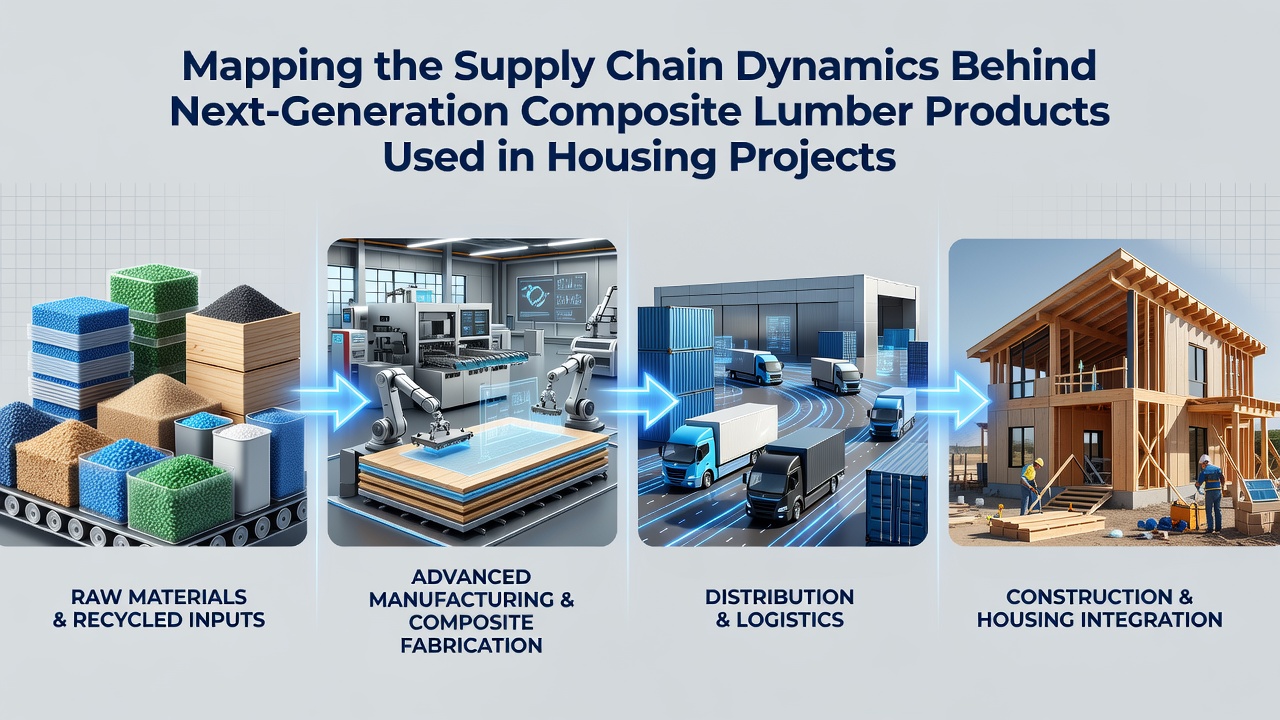
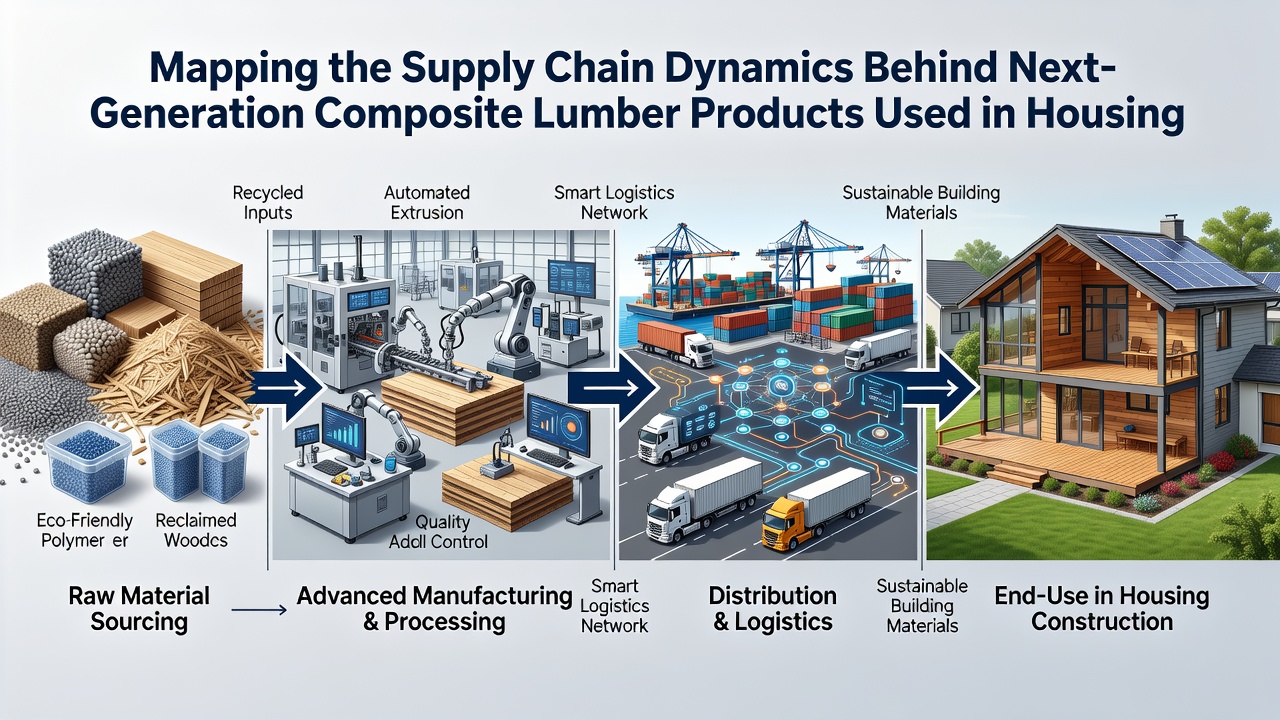
Next-generation composite lumber products combine wood fibers with polymer matrices to create structural components such as I-joists, laminated veneer lumber and oriented strand board variants that meet modern housing demands for strength and dimensional stability. Researchers track the supply chain from forest harvesting sites and chemical production plants through centralized manufacturing hubs and regional distribution centers before delivery to housing projects. Data from industry reports indicate that these materials now account for a growing share of framing elements in new residential builds across North America and Europe.
Raw Material Sourcing and Upstream Flows
Timber supply begins with certified sustainable forestry operations where softwood species undergo selective harvesting, chipping and drying processes before transport to processing facilities. Polymer resins, often derived from recycled polyethylene or bio-based alternatives, originate from petrochemical refineries or agricultural byproduct streams. Observers note that October 2026 projections from forestry agencies highlight increased integration of bio-resins in response to regulatory shifts in material standards. Logistics networks rely on rail and truck combinations to move these inputs efficiently while minimizing inventory holding times at intermediate storage yards.
Manufacturing and Processing Stages
At production plants, wood particles or veneers receive adhesive applications under controlled pressure and temperature conditions that form the final composite profiles. Quality control systems monitor resin distribution and fiber alignment to ensure consistent performance metrics. Engineers at facilities in multiple regions coordinate with raw material suppliers to adjust formulations when feedstock properties vary seasonally. Studies from academic institutions show that these adjustments maintain structural ratings required by building codes in target markets.
Distribution Networks and Inventory Management
Finished composite products move from manufacturing sites to regional warehouses that serve construction contractors and housing developers. Inventory tracking software synchronizes with demand forecasts derived from housing starts data, allowing just-in-time deliveries that reduce on-site storage needs. Supply disruptions, such as those caused by transportation delays or raw material shortages, prompt rerouting through alternative ports or secondary suppliers. Figures from trade associations reveal that optimized routing has shortened average lead times by measurable percentages in recent years.
One analysis of North American operations found that composite lumber shipments increasingly incorporate tracking tags that provide real-time visibility from factory exit to job site arrival. This visibility supports compliance documentation required for green building certifications. Meanwhile, European producers coordinate with port authorities to manage container flows that link Baltic timber sources with Mediterranean housing markets.
Regulatory and Sustainability Pressures
Government agencies in Canada and the European Union enforce standards that influence material selection and sourcing practices throughout the chain. Certification programs verify chain-of-custody documentation from forest to end use, while emissions reporting requirements affect polymer suppliers. Research indicates that compliance costs have prompted some manufacturers to consolidate supplier bases and invest in localized resin production capacity. These adaptations appear in supply chain maps that show tighter geographic clustering of key processing steps.
Integration with Housing Project Timelines
Construction firms incorporate composite lumber orders into project schedules that align with foundation completion and framing phases. Procurement teams review supplier lead times and capacity data before finalizing contracts. Case examples from large-scale developments demonstrate how early coordination between material engineers and site managers prevents bottlenecks during peak building seasons. Trade data shows rising volumes of these products entering multifamily and single-family housing segments alike.
Conclusion
Supply chain mapping reveals interconnected stages that begin with resource extraction and end with installation in residential structures. Coordination among forestry operators, chemical producers, manufacturers and distributors determines availability and cost structures for next-generation composite lumber. Ongoing data collection from regulatory bodies and industry groups continues to refine these maps as market conditions and material technologies evolve.