Sage Lang · 21 September 2026
Examining Adhesive Technologies Utilized in Assembling High-Strength Wood I-Profiles
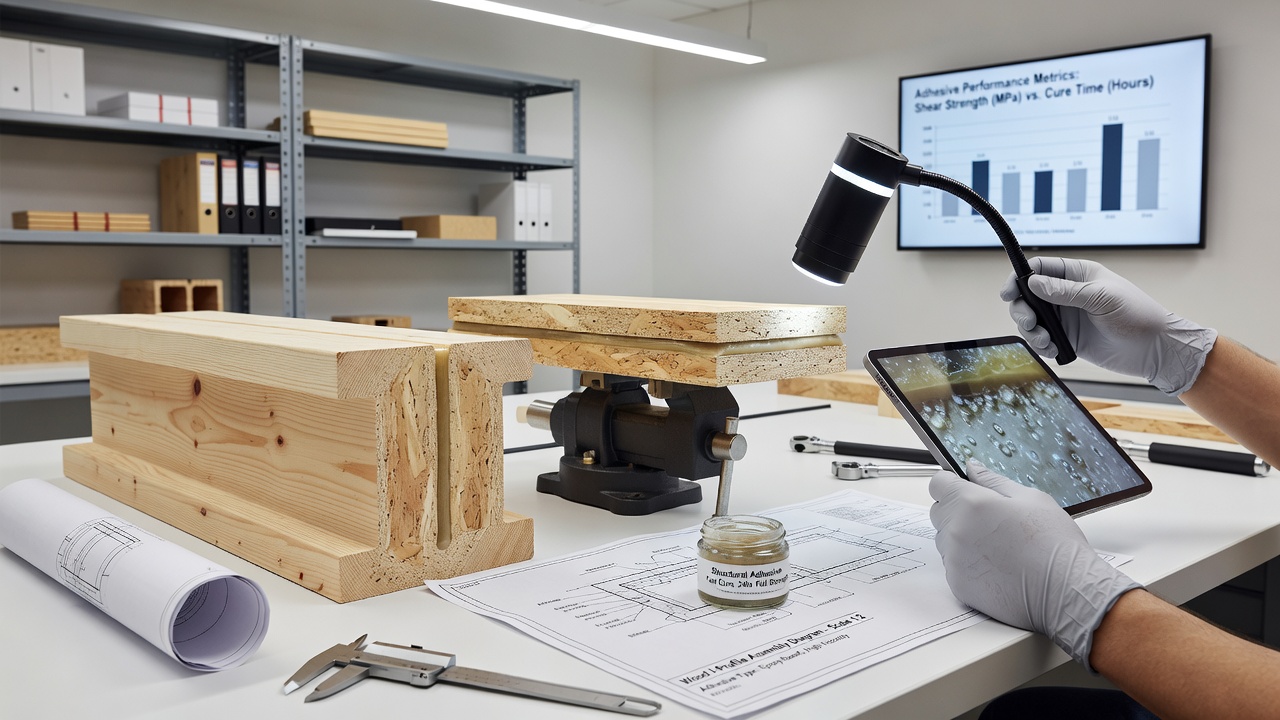
Wood I-profiles, also known as I-joists, rely on precise adhesive application to connect top and bottom flanges to a central web panel, and manufacturers select bonding agents based on load requirements, moisture exposure, and production speed. Research indicates that phenol-formaldehyde resins remain common in flange-to-web joints because they deliver high shear strength after heat curing, while polyurethane systems gain traction in facilities that prioritize room-temperature curing cycles. Data from engineered wood producers shows that adhesive choice directly affects the final product's bending resistance and long-term dimensional stability under varying humidity levels.
Adhesive Categories in Current Production Lines
Phenol-formaldehyde adhesives continue to dominate high-volume lines because they form rigid, water-resistant cross-links once pressed at elevated temperatures, and melamine-formaldehyde variants offer similar performance with improved light-colored glue lines that suit visible applications. Polyurethane adhesives, by contrast, expand slightly during cure to fill minor gaps in web alignment, and they bond effectively to both solid lumber flanges and laminated veneer lumber without additional primers in many cases. Observers note that epoxy systems appear less frequently in standard I-profile manufacturing because their higher cost and longer cure times limit throughput, although they surface in specialized marine-grade products where chemical resistance matters most.
Application Methods and Process Controls
Production equipment applies adhesive through roller coaters or extrusion heads positioned immediately before the web enters the press, and operators monitor bead width plus coverage uniformity to prevent dry spots that could initiate delamination. Continuous presses maintain consistent pressure across the joint while heat accelerates cure in thermosetting resins, whereas cold-press lines using moisture-curing polyurethanes require extended clamping periods that some plants offset by running parallel assembly stations. Figures from equipment suppliers reveal that automated vision systems now detect adhesive skips in real time, allowing immediate line adjustments that reduce waste and improve batch consistency.
Standards organizations such as APA – The Engineered Wood Association publish performance criteria that adhesives must meet before I-profiles receive certification marks, and testing protocols include cyclic delamination exposure plus static load evaluations that simulate decades of service. European producers reference equivalent EN standards that emphasize both initial bond strength and resistance to elevated temperatures, creating a shared framework that supports cross-border material qualification.
Performance Under Environmental Stress
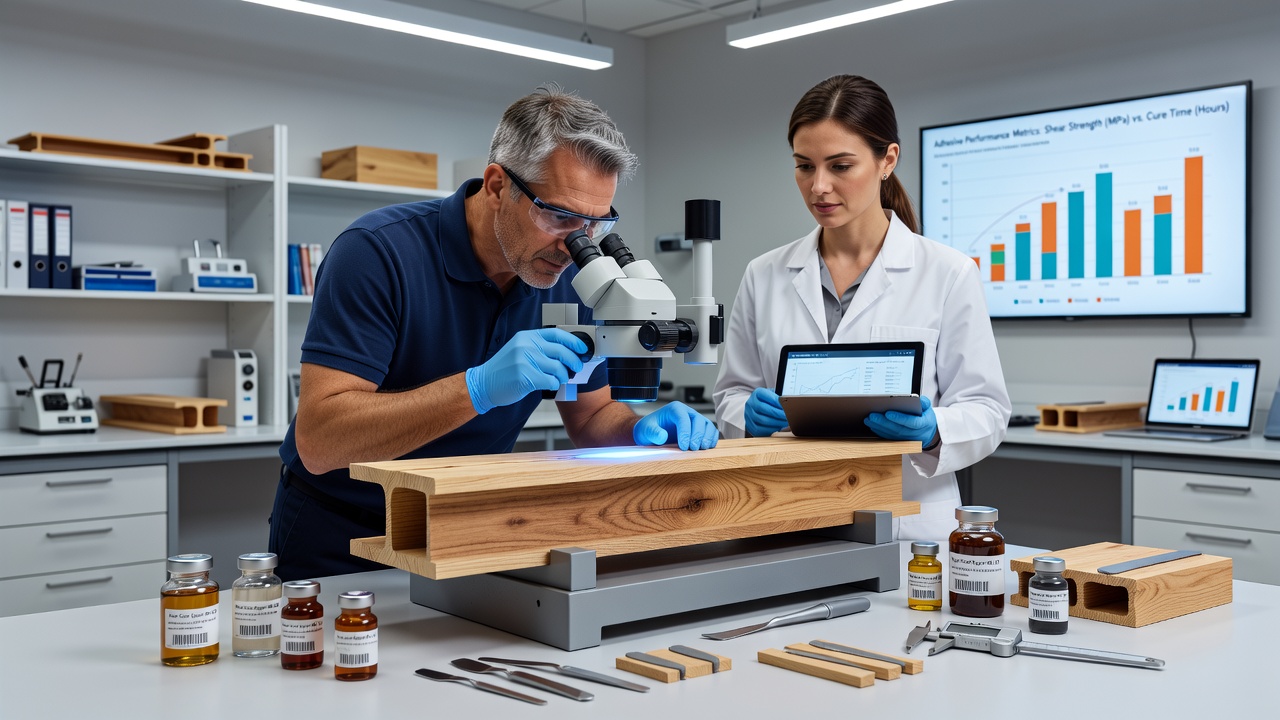
High-strength I-profiles encounter repeated wetting and drying cycles in roof and floor applications, and adhesive layers must maintain integrity when wood members expand or contract. Laboratory data shows that properly formulated phenol-formaldehyde bonds retain over 80 percent of dry shear strength after multiple boil-dry cycles, while certain polyurethane formulations demonstrate comparable results once fully cured and aged. Researchers at institutions including FPInnovations track creep behavior under sustained loads, and their reports indicate that adhesive modulus influences how much deflection accumulates over months of constant stress.
Fire performance adds another variable because some adhesives soften at temperatures below wood ignition points, potentially reducing composite action during early stages of a fire event. Manufacturers therefore incorporate intumescent additives or select higher-char adhesives in assemblies destined for commercial buildings with stricter code requirements, and third-party testing confirms that these modifications preserve structural capacity for the required duration.
Recent Shifts in Adhesive Formulation
Supply chain pressures since 2024 have prompted several producers to evaluate bio-based resins derived from lignin or soy protein, although commercial adoption remains limited to niche products where cost premiums align with specific sustainability certifications. Equipment upgrades in September 2026 at multiple North American plants introduced inline mixing systems that combine two-part polyurethanes at the point of application, reducing pot-life waste and allowing finer control over cure speed. These installations also integrate humidity sensors that adjust catalyst ratios automatically, responding to seasonal changes in plant conditions without manual recalibration.
Supply availability of certain resins fluctuates with petrochemical feedstock prices, and facilities that maintain dual adhesive capabilities report fewer production interruptions when one chemistry experiences shortages. Canadian and Australian manufacturers have documented similar strategies in industry reports, confirming that flexibility in adhesive selection supports consistent output across regions with different raw-material access.
Conclusion
Adhesive selection in high-strength wood I-profile assembly balances mechanical performance, process efficiency, and regulatory compliance, with phenol-formaldehyde and polyurethane systems currently meeting the majority of structural demands. Ongoing refinements in application equipment and formulation chemistry continue to expand options for producers facing varied climate conditions and certification standards. Data from testing programs and production monitoring confirms that joint integrity depends on precise control of coverage, pressure, and cure parameters throughout the manufacturing sequence.